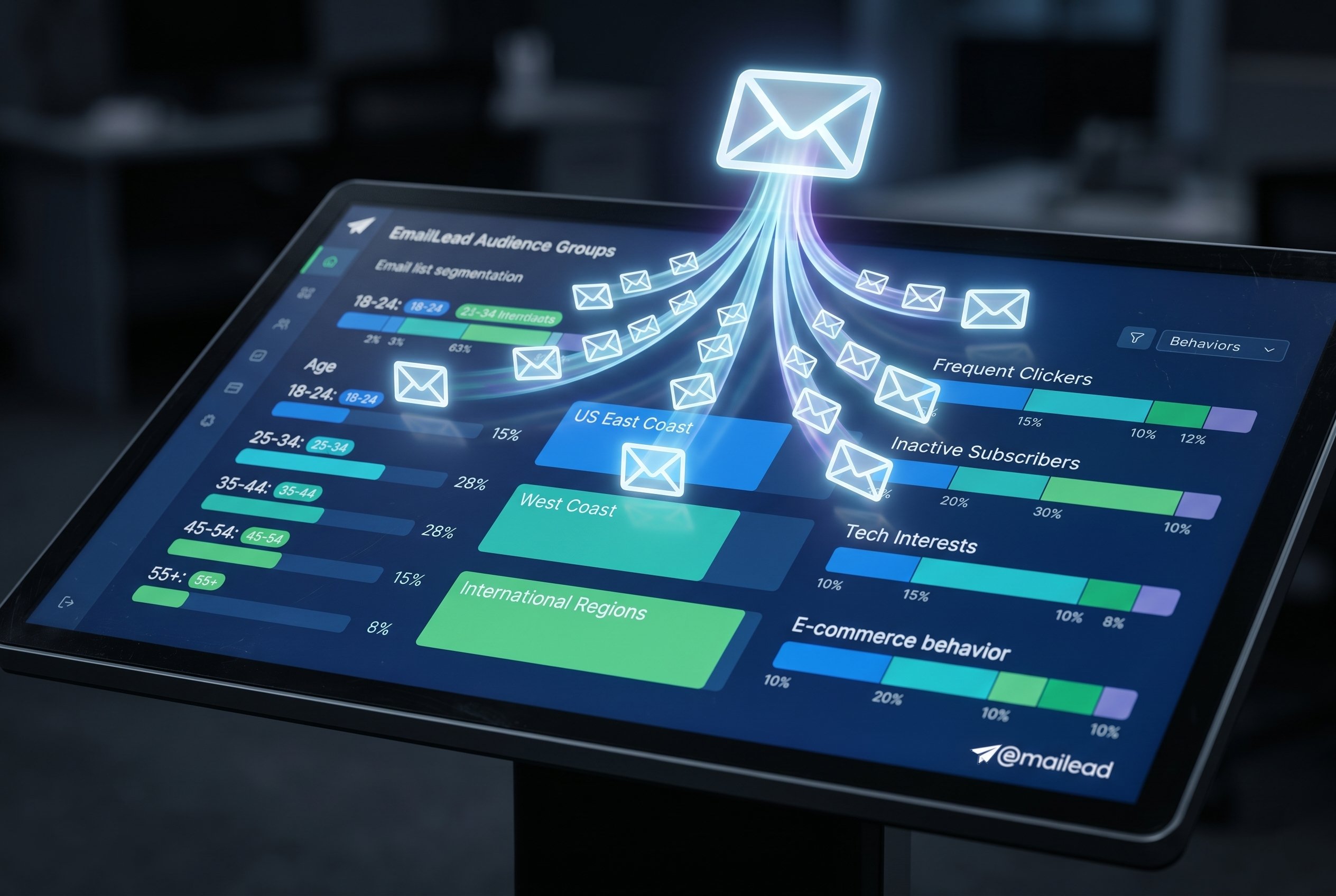
Many digital marketers treat their email list as a single, uniform entity. They write one newsletter, hit "send," and hope for the best. Unfortunately, in 2025, the "spray-and-pray" approach is no longer just inefficient—it actively damages your sender reputation and wastes precious lead opportunities.
By shifting to a behavioral email segmentation strategy, you treat subscribers as individuals based on where they are in their buyer's journey. According to industry data, campaigns sent to segmented lists yield a 760% increase in revenue. At EmaiLead, we have seen businesses regularly double or triple their email-generated revenue simply by breaking down their lists into distinct segments.
Why the "One-Size-Fits-All" Email Strategy is Failing
When you send the exact same message to everyone, you make two critical errors. First, you bore high-intent prospects who are ready to purchase with entry-level awareness content. Second, you alienate cold leads who just signed up by hitting them with aggressive sales pitches. The result? Spikes in unsubscribes, low open rates, and a one-way ticket to the spam folder.
Three Pillars of Behavioral Email Segmentation
To implement email segmentation that moves the revenue needle, you must track and leverage three primary categories of subscriber data:
1. Engagement and Activity History
Segment subscribers based on how active they are. Create segments for:
- Active Champions: Opened or clicked an email in the last 14 days. These users should receive early access to new promotions, loyalty rewards, and customer advocacy programs.
- Slipping Subscribers: Active within 30–60 days but currently quiet. Target them with low-friction, high-value educational content.
- Inactive Leads: Inactive for 60+ days. Put them into a structured win-back re-engagement sequence with deep discounts or exclusive resources.
2. Content Interest and Lead Source
Where did they sign up? If a prospect joined your list by downloading a guide on "Home Insurance Policies," they shouldn't receive sequences promoting "Automobile Insurance." Match your follow-up workflows precisely to the lead magnet or service category that initiated their signup.
3. Purchase Intent and Buyer's Stage
Map your list based on transactional signals. For B2B or lead-gen sites, separate top-of-funnel information-seekers from mid-funnel users who requested a quote. For e-commerce, segment buyers by purchase frequency (one-time buyers vs. repeat loyalists) and average order value (AOV).
Step-by-Step: Setting Up Your First Segmented Campaign
Ready to start? Follow this four-step roadmap to launch a segmented campaign:
- Define Your Goal: E.g., re-engage slipping leads or upsell existing customers.
- Build the Criteria: Select parameters in your ESP (Email Service Provider) to filter subscribers dynamically. Keep it simple: Start with engagement status and lead source.
- Craft Tailored Copy: Write headlines and calls-to-action that speak directly to that segment's specific problems or desires.
- Establish Automation: Hook these segments up to automated triggers. When a subscriber slips from "Active" to "Slipping," your system should auto-transfer them into a nurturing sequence.
Conclusion: Compounding Your Email Valuation
Email marketing remains the highest-ROI channel in performance marketing, but only if executed with precision. By segmenting your database, you deliver targeted messages that resonate, increase clicks, and directly escalate conversions. Start with one simple segmentation experiment this week, and watch your marketing economics transform.